

The success of any party of Independents will depend not on its branding, but on whether it can deliver the transparency and accountability voters are demanding, writesDavid Higginbottom.
INDEPENDENT AUSTRALIA isright to askwhether a proposed party of Independents would become just another party.
It is not a trivial semantic objection. If independence is the selling point, then structure is the test. A movement that begins as a rebellion against party discipline, opaque preselections and donor access can very easily become another machine if it adopts the same habits in the name of electoral efficiency.
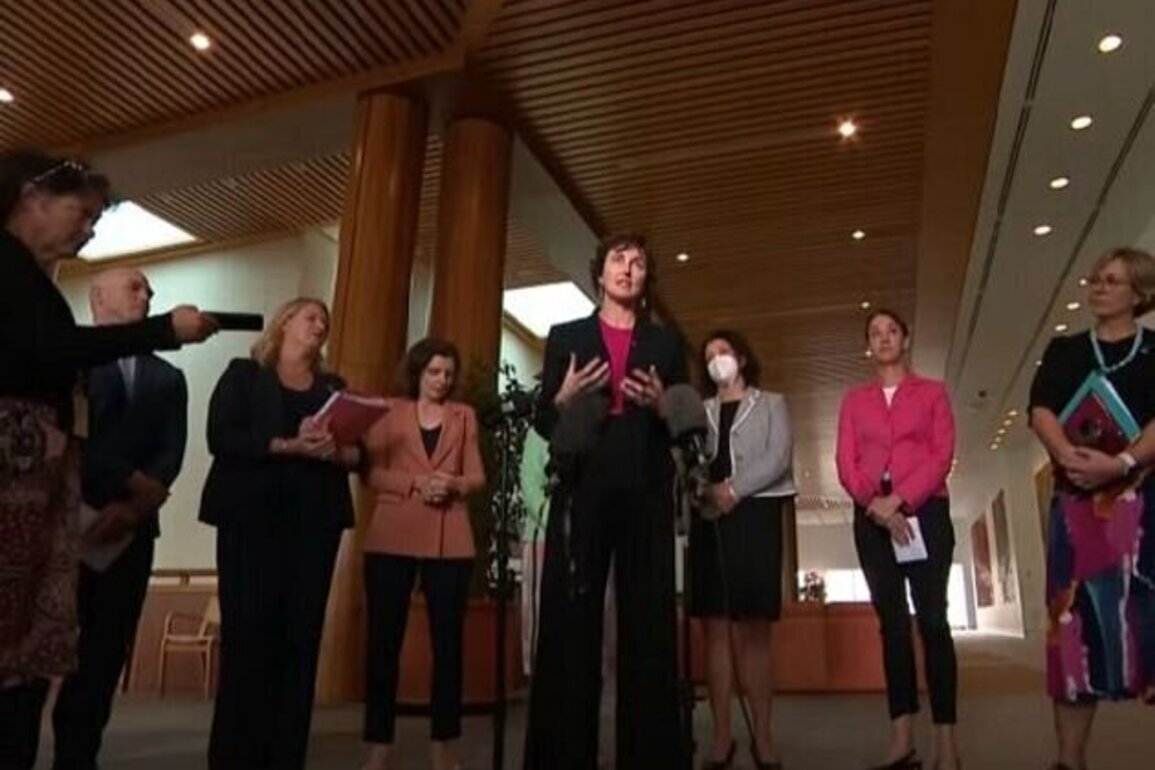
The deeper issue is not whetherZali Steggall,Allegra Spender,David Pocockor any other crossbench figure should cooperate. The question is whether any new organisation would make power more visible, accountable and contestable, or whether it would merely create a more fashionable version of the political culture Australians are already rejecting.
That culture has a familiar pattern. Candidates speak of conscience before entering Parliament, then discover that advancement depends on loyalty, access and survival. Party rooms become more important than electorates. Preselections are narrowed by internal factions. Lobbyists arrive long before the public knows an issue is live.
Independents now partying: Why a new party will likely be just another partyManaging editor Michelle Pini discusses the prospect of the Teal Independents forming a new political force and what it might mean for our democracy.
Freedom of Informationbecomes a contest of delay and exemption.Integrity bodiesare expected to repair systemic problems after the damage has already been done although these seem designed to fail.
This is why the argument about a party of Independents cannot be separated from the wider transparency crisis. The old parties are not simply suffering a branding problem. They are beneficiaries of institutional arrangements that reward secrecy, incumbency and access. If a new centrist formation wants to claim democratic renewal, it must prove that it is structurally different, not merely tonally different.
As I argued inPearls and Irritations, corruption is not simply a moral failure by individuals; it is a predictable outcome of political structures that reward loyalty, access and survival over accountability, transparency and the public interest.
TheParliamentary Library notesthat money in politics can corrupt democratic processes because donors may expect favours or policy decisions, while large spending can drown out smaller players and new entrants.
A party of Independents would face its own contradiction. The more it centralises fundraising, branding and campaign infrastructure, the more it risks centralising power. The more it speaks with one voice, the more it risks disciplining dissent. The more it courts large donors to compete with the major parties, the more it risks becoming dependent on the same private access economy it once criticised.
The word Independent should mean more than not being Labor, Liberal, National or Green. It should mean independence from undisclosed money, internal factions, consultant-written policy and lobbyist capture.
It should also mean independence of judgment for elected representatives after polling day. A voter who elects an Independent should not later discover that the local MP has been absorbed into a party room by another name.
That does not mean Independents must remain isolated. Shared principles, shared administrative support and coordinated reform agendas can help communities overcome the advantages enjoyed by the major parties. The key distinction is between coordination and control. Coordination helps representatives do their jobs. Control tells them what their job is.
The reform agenda is hardly radical. TheAustralia Institutehas proposed monthly ministerial diary disclosures, including the purpose of meetings, links between diary entries and the lobbyist register, more equitable access to Parliament House, extension of the register to in-house lobbyists and stronger enforcement. These are not revolutionary demands. They are basic democratic hygiene.
This is where a party of Independents could either expose the problem or become part of it. If it simply says trust us, we are better people, it will fail the democratic test. The issue is not personal morality it is system design. Good people operating inside opaque structures eventually face the same dilemmas as everyone else. The reform task is to introduce guardrails robust enough to constrain even those whose good intentions did not survive contact with power.
A credible new party should publish its democratic architecture before seeking registration, donations or candidates. It should tell voters who governs it, how candidates are selected, who can veto endorsement, what donors receive by way of access, whether elected representatives can dissent, how policy positions are formed and how local communities can remove support from a representative who ceases to represent them.
Younger voters and Independents could spell end of two-party systemA younger demographic seeking change, along with a shift in the popularity of Independents and minor parties, could see the demise of our traditional two-party system.
What a genuine Independent formation should do:
- Publish all donations above a modest voluntary threshold within seven days, including cumulative totals and donor-linked entities.
- Publish meetings with lobbyists, corporate representatives, peak bodies, consultants and major donors, including topic and attendees.
- Ban corporate hospitality and disclose any gift, travel, ticket or sponsored event invitation, accepted or declined.
- Require local community selection processes, publish rules and prohibit central override except for clearly defined integrity breaches.
- Guarantee that MPs and senators retain the right to vote according to their electorate commitments and conscience.
- Maintain public conflict-of-interest registers for officeholders, candidates, senior staff and governing committee members.
- Publish policy consultation inputs, commissioned research funding sources and any external drafting assistance.
- Release constitution, board minutes, audited accounts and internal dispute processes in an accessible form.
These commitments would not make politics pure. No institutional design can abolish ambition, factionalism or self-interest. But they would make capture harder and betrayal easier to detect. They would also shift democratic renewal from rhetoric to practice.
The broader lesson is that Australias democratic crisis is not solved by replacing one set of political actors with another. It is solved by changing what political actors are allowed to hide. A party label is less important than the rules underneath it. A major party can become more democratic if it opens preselections, discloses influence and loosens discipline. An Independent can become less democratic if they centralise power, conceal donors and treat voters as a brand audience rather than a real community.
The rise of Independents and minor parties reflects a public judgment. Voters are not merely shopping for moderates. They are protesting a system that too often appears more responsive to concentrated power than to citizens. The project of democratic renewal must therefore be larger than any teal, centrist or anti-party vehicle. It must include real-time transparency, stronger FOI, lobbying reform, adequately funded watchdogs, open candidate selection and citizen participation between elections.
So, would a party of Independents be just another party? It will be if it asks voters to accept independence as a marketing claim. It will not be if it becomes the first federal political organisation to build transparency into its operating system from day one.
Australians do not need another closed party room with better lighting.
They need the doors opened.
David Higginbottomis a member of the coordinating committee of theIndependent and Peaceful Australia Network(IPAN) and coordinator of the Make Peace A Priority campaign (mpap.au).
Related Articles
- Independents now partying: Why a new party will likely be just another party
- EDITORIAL: Why a party of Independents will likely be just another party
- The Independents challenging political tradition
- Murdoch takes aim at Independents
- Insiders and outsiders: The dispute at the heart of Australian politics