

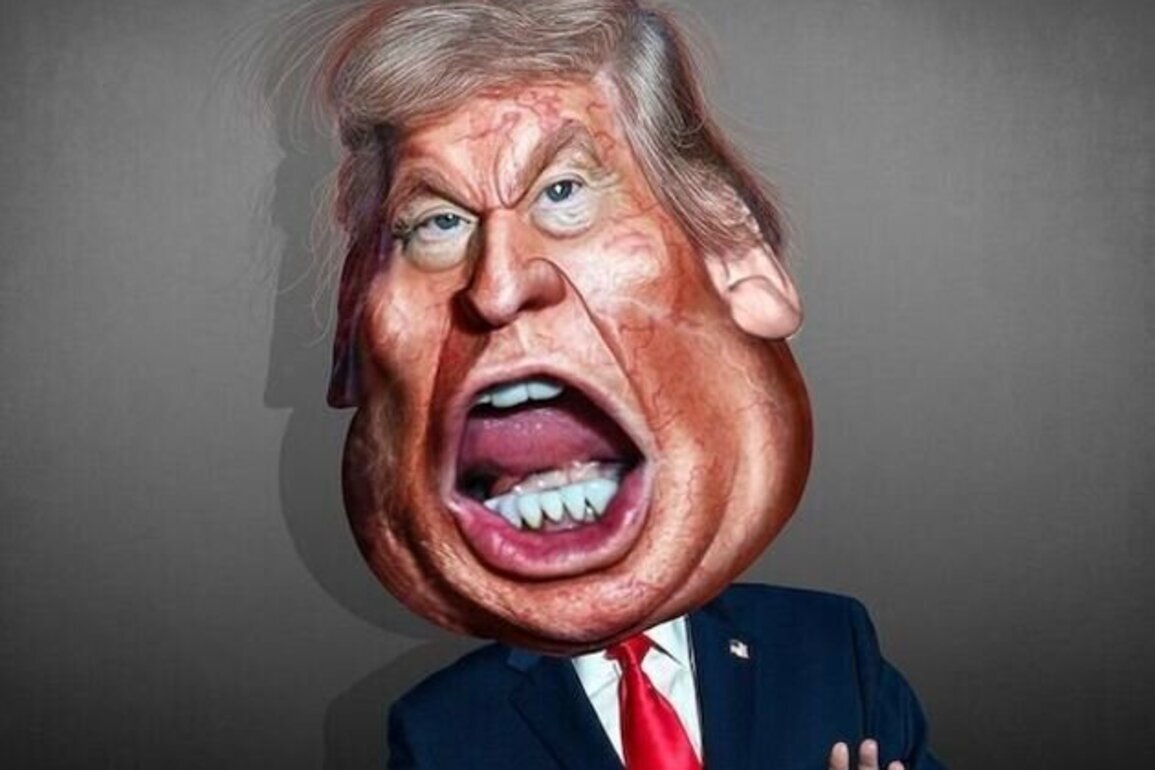
Donald Trumps biggest blunders, DrJeff McMullenwrites, will hinder any prospect of a lasting peace or real stability in the war-torn Middle East.
WHILE Irans militant Islamist regime has often threatened to wipe Israel from the map, no United States President before Trump has ever countered with a genocidal threat.
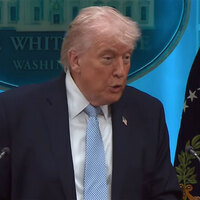
Trumps demented threats will loom large over any prospect of the announced two-week ceasefire in the Iran War, leading to a broader and lasting peace between the belligerents. His wish for smarter minds to prevail is a devastating self-indictment.
In emulatingRichard Nixons so-calledmadman theory, Trump mistakenly believed that veiled threats of nuclear annihilation might force an enemy to surrender or at least "cut a deal". There is no evidence these threats forced Irans hand.
In reality, Trump was only revealing anger and panic after crucial miscalculations that led to closure of the Strait of Hormuz to most shipping; a growing toll on the U.S. and global economy; and above all, the impact this had on his beloved U.S. stock market.
Donald Trump and the Iran War path to madnessOn Easter Sunday, Trump warned that a 'whole civilisation will die tonight' if Iran refused his latest demands.
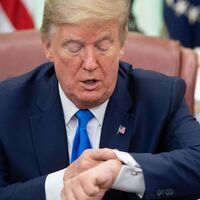
On Easter Sunday, Trumps post on Truth Social was full of rage:
With the war in Iran continuing past the five-week mark, Trump mingled with little children at the annualWhite House Easter Egg Roll. A giant Easter Bunny looked over his shoulder.
It was mind-boggling to watchthe President rambleabout the war in Iran, the price of eggs and, of course, how he had saved America:
This is so far from the truth, even for a chronic liar, that it demonstrates how Trump has lost the plot.
Through his strategic missteps, lack of discipline and abandonment of self-control, he has offended and alarmed allies, weakened theNATO Allianceat a critical time, and disastrously undermined trust in United States global leadership.
The April 8two-week ceasefire, which came into force just one and a half hours before Trumps apocalyptic deadline, might soon be cast by Secretary of War,Pete Hegseth, as a heaven-sent peace settlement. The ceasefire can hardly be credited to the hapless diplomacy of this U.S. Administration.
The Iranians had every reason not to trust Trumps non-diplomat negotiators,Steve Whitkoff, a billionaire real estate developer and Trumps son-in-law,Jared Kushner, both with extensive business dealings in the Middle East.
This war started when the U.S. team supposedly were deep in earnest negotiations to settle disputes over Irans attempts to acquire nuclear weapons and amass a threatening arsenal of long-range missiles.
Will the Trump Administration ever be trusted again by allies or adversaries?
On this occasion, Pakistan did the hard diplomatic yards to achieve the conditional cease-fire. Trkiyes Foreign MinisterHakan Fidanhelped through phone hookups with the Gulf States,relaying messages to Iran and the United States.Then,China intervenedto persuade Iran that a short ceasefire could proceed to a satisfactory full settlement.
The U.S. and Iran were left to spin theirdubious claims of victoryand predictably bicker over who had forced whom to call off the fighting temporarily.
Unsurprisingly,Israel soon announcedthat it was not agreeing to end its attack on Hezbollah forces in Lebanon. Pakistans Prime MinisterShehbaz Sharif, who helped negotiate the ceasefire, insisted that the conflict in Lebanon was a part of the agreement. So right here is just one of the early glaring cracks in the ten-point ceasefire plan.
As Iwrote last month, Israels Prime Minister Benjamin Netanyahu has always had his own agenda, which included crippling Irans ability to attack and also severely degrading the effectiveness of Iranian terrorist surrogates, such as Hezbollah.
JEFF McMULLEN: Fancy thrones, paper tigers and dirty bombsDonald Trump boasted of victory on Day One of the new Iran War.Jeff McMullen warns that the risks of escalation and fallout are yet to come.
New York Times journalists,Maggie Haberman andJonathan Swan, have reinforcedNetanyahus swayoverTrumps decision-making.
In anew book, Regime Change: Inside the Imperial Presidency of Donald Trump, they detail how Netanyahu joined Trumps key advisers in the White House Situation Room and convinced the President that Iran had become extremely vulnerable. It was the right time for a war that would be short, devastating and very quickly lead to Iranian regime change.
These miscalculations are staggering.
According to Haberman and Swan, Trumps CIA Director,John Ratcliffe, called thisscenario for regime changefarcical. Secretary of StateMarco Rubiosaid bluntly it was bullshit and Chairman of the Joint Chiefs of Staff, GeneralDan Caine, calculated that it was just hard-selling by the Israelis because their plans were not always well-developed. Yet, as Haberman and Swan conclude, disturbingly, none of these team players dissuaded Trump from enjoining the Netanyahu gambit.
It is hardly surprising that many Israelis are unsettled by a war that lasted far longer than Netanyahu calculated. There have been numerous Iranian missile attacks on civilians, including those in other Gulf States, without any assurances that they will be any safer in future.
Israeli Opposition LeaderYair Lapidhas said that the current situation is adisaster for Israel. He claimed that Netanyahu had failed politically, failed strategically, and did not meet any of the goals he set himself.
IransSupreme National Security Councilhas shattered President Trumps claims that the United States has achieved all its most important military goals in this war.
The Iranians insist that they will retain their right to enrich uranium and maintain a nuclear stockpile. Ending this threat was one of Trumps most crucial goals, after erroneously stating that last years attacks on Irans nuclear sites hadobliterated the nuclear threat.
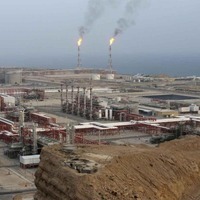
Causing even greater alarm, theSupreme National Security Councilis insisting that it will regulate the future flow of shipping through the Strait of Hormuz.
Furthermore, Iran wants to impose charges call it a Trumpian tariff or permanent toll on traffic through the waterway.
During the war, atoll of about $2 millionper oil tanker (paid in Chinese yuan or cryptocurrency) has been imposed on some of the ships allowed through the Strait.
Irans objective now appears to be to create a lasting mechanism to repair the devastation inflicted by the war.
Strategically speaking, if a toll system persists, it might make Iran one of the richest nations in the Gulf region. It would certainly drive up the cost of a barrel of oil, given that 20 per centof the worlds supply usually passes by Iran and Oman, which is also involved in seeking this toll arrangement.
Before the start of the Iran war, oil tankers and other shipping moved freely through the narrow Strait of Hormuz. If Trump were to accept Irans unique geographic claim of now controlling this vital sea lane, it would amount to one of the greatest strategic "own goals"in American history.
The Iranians are aware that the United States still has three aircraft carriers, supporting vessels, numerous aircraft, marines and special operation forces at the edge of this warzone.
Iran wants assurances that it will not be attacked again by the United States or Israel, that it will be paid reparations and that the sanctions imposed in various forms for more than four decades would be lifted.
In one of the demands most unlikely to be met, Iran also seeks the withdrawal of all U.S. forces from bases in the Gulf States.
There clearly is a chasm between Irans version of a ten-point plan and the United States offering of a 15-point plan. We should still expect extremely difficult, protracted negotiations if Iran and the U.S. take up Pakistans invitation for direct talks in Islamabad.
After threatening to end civilisation in Iran, it is just like Donald Trump to declare in his next social media post that 'this is a big day for World Peace':
When allies threaten war crimes, silence is self-destructionIf Trump bombs Iran's civilian infrastructure, Britain and Australia must respond not out of partisanship, but because the laws that protect Tehran today protect London and Sydney.
As his behaviour has become increasingly maddening, there are renewed calls by Democrats for a third attempt to impeach Trump.
SenatorEd Markey of Massachusetts estimatedthat there were now more than 50 Democrats in the House of Representatives and some 20 in the Senate willing to vote for impeachment.
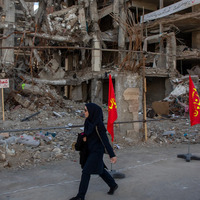
SenatorPeter Welch of Vermont declaredthat Trumps impulsive action in launching this war had caused grievous damage to Iranian civilians, including attacks on 60 hospitals, 44 schools and also on desalination plants on which the entire population depended.
Yes, the Iranian regime has killed tens of thousands of its protesting citizens since last Christmas andbrutal executionsof political opponents have continued.
Five weeks of the Iranian war have claimed the lives of thousands more innocent civilians, including the appalling slaughter of children in Iran and Lebanon. Thirteen U.S. military personnel have also gone home in coffins. This cannot be swept away by Trumps attempts to shift blame.
An unstable President, his chaotic leadership, tactical errors, profane outbursts and damage to U.S. credibility are combining to energise more American citizens to express their outrage.
What have they been doing, you may ask?
The truth is that only next Novembers midterm U.S. elections hold any possibility of curbing Trumps willingness to use American military power at whim.
Journalist, author and filmmakerDrJeff McMullenAM is a patron of the Australian Indigenous Doctors Association (AIDA) and the First Peoples Disability Network (FPDN), both of which officially support the "Yes" campaign. He is an ambassador forNOFASDAustralia.
Related Articles
- EDITORIAL: Trump Land and the Iran War path to madness
- Stop the stupid! Donald Trump & Co have got to go
- When allies threaten war crimes, silence is self-destruction
- An American fairytale: Donald J, the man who thought he could work miracles
- Trump is the most dangerous man in the world