

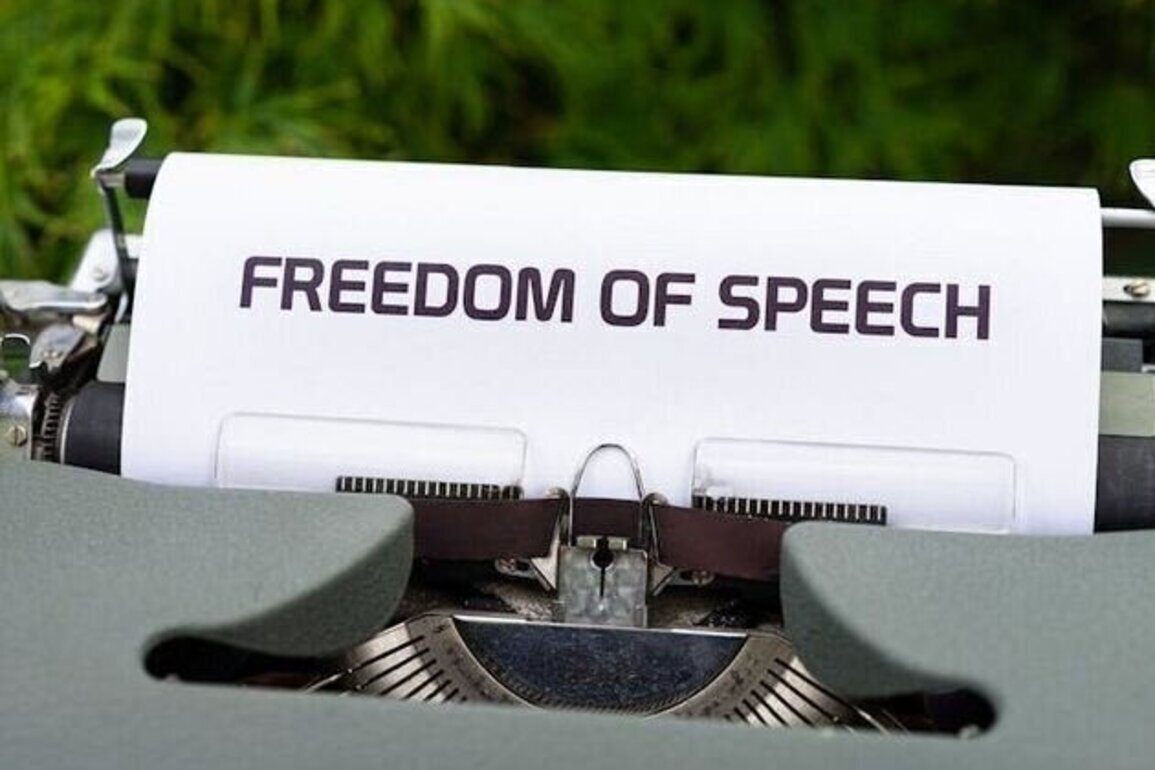
Democracy is not a tea party where everyone makes polite conversation it's messy and confrontational,sometimes even offensive if we cannot handle that, thenwe should stop pretending to be a free society, writesJames Stekhoven.
THE AUSTRALIAN PARLIAMENT has just passed the strongest hate speech laws in our nations history. Citizens now face up to seven years in prison for publicly inciting hatred against groups based on race or ethnicity. Religious and community leaders who abuse their position face up to tenyears.
Yet as I write this, our political leaders continue to make statements about foreign conflicts that would land any ordinary citizen in legal jeopardy. The double standard is astonishing.
Let me be clear: I am not defending hate speech. Racist vilification has no place in a civilised society. TheCombatting Antisemitism, Hate and Extremism Act2026was rushed through Parliament after the Bonditerrorist attack, but its stated intention protecting communities from hatred that can incite violence is legitimate.
But heres the hypocrisy the political class doesnt want us to consider: the same laws that muzzle ordinary Australians leave politicians untouched.
Two sets of rules
The new legislation creates an offence of publicly promoting or inciting hatred against a person or group on grounds of race, colour, or national or ethnic origin.
It targets:
The test is partly subjective if a member of the target group feels threatened, fears harassment or violence, or fears for their safety, the law can be activated, regardless of the speakers intention.
The new hate speech bill threatens Australian civil libertiesIf there was ever a sign that Australian civil liberties and rights have been thrown under a bus, it would be now.
Yet, when our Prime Minister,Anthony Albanese, endorses foreign military actions that kill children, when he aligns Australia with policies that will almost certainly inflame Muslim communities worldwide, his words are treated as legitimate policy debate, not incitement.
Greens SenatorMehreen Faruqiput it bluntly recently:
The Constitutional fiction
OurAustralian Constitutioncontains no right to freedom of expression.Instead, the High Court has found an'implied freedom of political communication'arising from sections 7 and 24 the provisions establishing representative government.This freedom is not a right of citizens, but a limit on legislative power. It exists to protect the process of politics,not the person expressing themselves.
Notice the hierarchy: representatives and represented. But in practice, the representatives enjoy near-total immunity for their speech, while the represented walk on eggshells.
What political speech is actually protected?
The implied freedom protects communication about political matters. When a citizen argues that supporting foreign military action will inflame Australian Muslim communities, that is a political prediction about the consequences of government policy.
Yet under the new laws, such statements could theoretically be investigated if a reasonable person from a target group felt intimidated. The law does not require intent to intimidate only that a reasonable person would feel intimidated.
Social cohesion defence collapses in NSW court, exposing QLD speech lawsA sharp appellate ruling has struck down NSWs social cohesion protest laws as unconstitutional, placing Queenslands speech crackdown and looming federal legislation squarely in the legal firing line.
The immunity of power
TheParliamentary Joint Committee on Intelligence and Securitynoted that the proposed racial vilification offence will not proceed. But the framework remains concerning.
When political leaders describe entire nations or movements in dehumanising terms, do they not create the conditions for hatred to flourish?
Yet political speech is exempt not legally, but practically. No politician will ever be charged under these laws for statements made in their official capacity, no matter how inflammatory the predictable consequences.
The chilling effect
The practical result is a chilling effect on political debate. Citizens who might otherwise speak out will now hesitate. They fear that their words could be interpreted as inciting hatred if a member of some group takes offence.
As The Spectator Australia observed:
Antisemitism or accountability? Drawing the line without erasing free speechAs Australia tightens hate-speech laws, a flawed definition of antisemitism risks being weaponised to shut down legitimate criticism of Israel rather than confront real hatred.
TheJustice and Equity Centrenoted in its submission that protections should be expanded to include other vulnerable communities, but the principle of protecting speech from criminalisation remains vital.
What democracy requires
In genuine democracies, citizens can speak publicly about their convictions even when those convictions offend others. AsSalman Rushdieadroitly observed:
TheEuropean Court of Human Rightshas noted that:
This principle applies equally to political beliefs.
Two magistrates, two questions and the limit of Queenslands speech lawsTwo Brisbane cases may test Queenslands speech laws in court, but the deeper question is why they restrict some speech while leaving its mirror untouched.
The question that remains
So I return to my original question: Why do politicians get to inflame, but citizens dont?
If the new hate speech laws are genuinely about protecting communities from hatred that leads to violence, they must apply to all including those in power.
If they are instead about controlling the speech of ordinary Australians while leaving the political class untouched, they are not anti-hate laws at all. They are instruments of authoritarian control dressed in the language of compassion.
The implied freedom of political communication was meant to protect democratic debate. But when citizens fear speaking while politicians speak freely, that freedom has become a one-way street.
We must demand either that our leaders be held to the same standards as the rest of us or that the laws be reformed to protect genuine political communication, no matter how uncomfortable it makes the powerful.
Democracy is not a tea party where everyone makes polite conversation. It is messy, confrontational, and often offensive. If we cannot handle that reality, we should stop pretending to be a free society.
The choice is ours but we must make it before the silencing is complete.
DrJames Schuurmans-Stekhovenhas a career defined by high-level academic rigour, a polymathic approach to research and a commitment to strategic optimisation across multiple disciplines.
Related Articles
- Apply hate speech laws "equally" send us all to gaol