

By cracking down on protest and edging toward heavy-handed enforcement, NSW risks turning its police into politicised enforcers a dangerous drift toward I.C.E.-style tactics, writesTony Smith.
THE UNITED STATES Immigration and Customs Enforcement Agency (I.C.E.) has caused at least two deaths while seeking to deport people at the command of the president. The unpopularity of I.C.E. has been fertile ground for songwriters.
TheAntiwar Songswebsitehas several relevant works.Bruce Springsteen(Streets of Minneapolis),David Rovics(As I Watch Minneapolis Burn),Jesse Welles(Good versus I.C.E. and Join I.C.E.),NOFX(Minnesota Nazis),Penka Jane(The Folks from Minnesota),Egin(Pretti and Good) andBilly Bragg(Minnesota Heroes) all express disgust with this paramilitary agency.
I.C.E. lacks respect. It seeks unqualified recruits and offers insufficient training. They are effectively political police conducting arrests in an inhumane fashion and reacting violently if their arbitrary directions are resisted.
There is no similarity between I.C.E.s gung-ho operations and the conduct of the New South Wales police force. Hopefully, the political masters of the police service will not create circumstances that make it into an undisciplined vigilante agency.
Sydney protests are our Minneapolis momentWhen riot police use force against peaceful protesters and premiers applaud the batons, its no longer just a rally, its a warning about how quickly democratic rights can be stripped away.
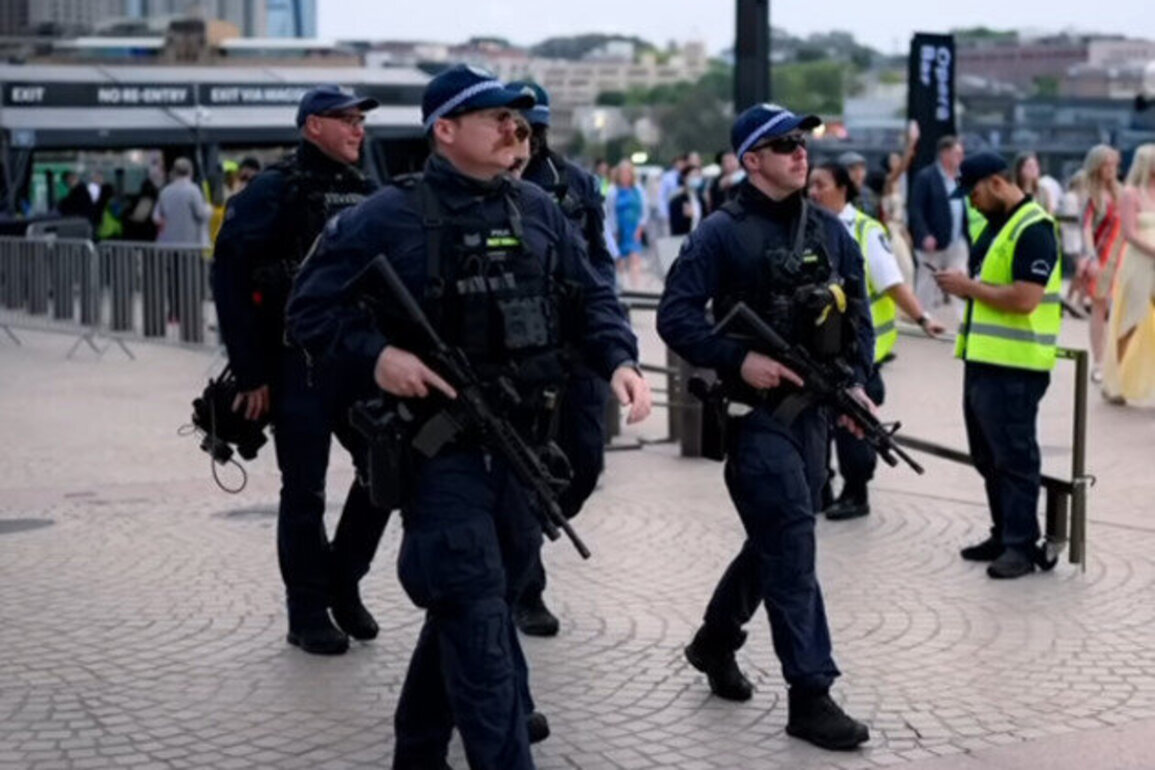
The heavy-handedness of the police dealing with demonstrations against the visit of the President of Israel brought forth expressions of outrage in letters to the press and theAustralian Human Rights Commission, which, in astatement, said it was concerned.
Conservative politicians might blithely advocate police assaulting members of the public with gas and rubber bullets, but a Labor Government should realise the stupidity of such suggestions. It is sadly true that after demonstrations around anAPECmeeting in Sydney, a Labor Governmentbought a water cannon. Thankfully, it has never been used. Paramedics estimated that the cost of the thing could have secured two fully equipped emergency ambulances.
Placing police officers in confrontation with demonstrators separates them from the community. The citizenry becomes the other and police regard them with suspicion and hostility. This outlook of police as a thin blue line has been discredited. An us and them ethos facilitates corruption and a blue wall of silence, which prioritises peer loyalty over legal responsibilities. Police can be tempted to think that no one outside the force understands them.
Historically in New South Wales, allegations of police misbehaviour were downplayed with the rotten apple theory. This assumes that the system worked all right, but that there are always individuals who break the rules. So if the system is not broken, do not fix it.
Others took corruption seriously. Several Independent MPs demanded action in the early 1990s. Their advocacy led to the establishment of theIndependent Commission Against Corruptionand theWood Royal Commissioninto the police force.
APolice Integrity Commissionwas established, the forerunner of theLaw Enforcement Conduct Commission. Greater accountability was expected. Diversity in recruitment and promotion in terms of gender and ethnicity became policy. Some previously illegal activities were decriminalised so they would not be driven underground. Civilian personnel were employed to take administrative burdens off uniformed officers.
Anti-protest laws highlight political hypocrisy across the boardGovernments are punishing protesters for speaking out against the very issues our politicians won't fix.
Police are human. They are subject to the same uncertainties and conflicts affecting everyone, plus some unique issues relating to their powers and the pressures on them. The system needs constant attention, scrutiny and improvement. Using police officers to implement political ideology around demonstrations places the force in situations that could erode public respect and support. We do not want thoughtless politicians to recreate the corrupting us-and-them culture of the past.
Police personnel in state and territory jurisdictions around Australia are recruited mostly from the working class. The Police Associations are effectively trade unions and they should be able to expect a Labor Government to be sympathetic to their needs as workers.
Politicians sometimes defend their rowdy and aggressive behaviour in the parliamentary bear pit by claiming that elected chambers act as safety valves for community tensions. They argue that it is better to have differences aired in an assembly devoted to words than to see violence in the streets.
Unfortunately, state and federal parliamentarians have been reluctant to debate the genocide in Gaza. They have not discussed Palestine vigorously. Their failure has allowed a build-up of tensions in the community. Their inadequacy has spilled into the streets. They should not use the police to divert attention from their own failures. They should not turn our police into I.C.E.-like, ethically compromised political tools.
Two murderers committed theoutrage at Bondi Beach. It is bizarre to claim that banning marches and demonstrations makes such attacks unlikely. Indeed, protest marches can provide catharsis; by allowing an expression of emotions, they can moderate public sentiment.
Equally bizarre is the decision to allow four firearms per person as a right. Surely the responsibility must shift to gun owners and require them to explain why they must have one firearm, let alone four. We have a crisis in domestic violence. A realistic restriction on firearm ownership would be a small step towards making women and children safer.
New South Wales seems determined to turn back the clock and channel QueenslandsJoh Bjelke-Petersen. A droll joke ran that Queensland had only 11 months because Bjelke-Petersen banned marches. Police were empowered to break up meetings and arrest people at gatherings small enough to deter family picnics.
Social cohesion defence collapses in NSW court, exposing QLD speech lawsA sharp appellate ruling has struck down NSWs social cohesion protest laws as unconstitutional, placing Queenslands speech crackdown and looming federal legislation squarely in the legal firing line.
PoetBruce Dawedescribed the situation succinctly.
News from Judea has the following:
The Governments ban on demonstrations may have other motivations. It has attempted to discourage anti-genocide and pro-Palestine protests before. On one occasion, a former Greens election candidate sufferedserious damage to an eyeand in subsequent legal proceedings, she was cleared of any charges.
Taking this drastic step to ban demonstrations in the wake of the Bondi killings whiffs of opportunism. It suggests that the Labor Government is exploiting the massacre in a dishonourable fashion to implement its agenda. Such knee-jerk reactions threaten both police and the community.
AsEric Boglehas sung, freedom is a fragile flower. It must not be thrown on the compost heap of political cynicism. Politicians should heed the poets.
DrTony Smithis a former political science academic with interests in parliament, elections and ethics.
Related Articles
- Tasering the elderly is demented policing