


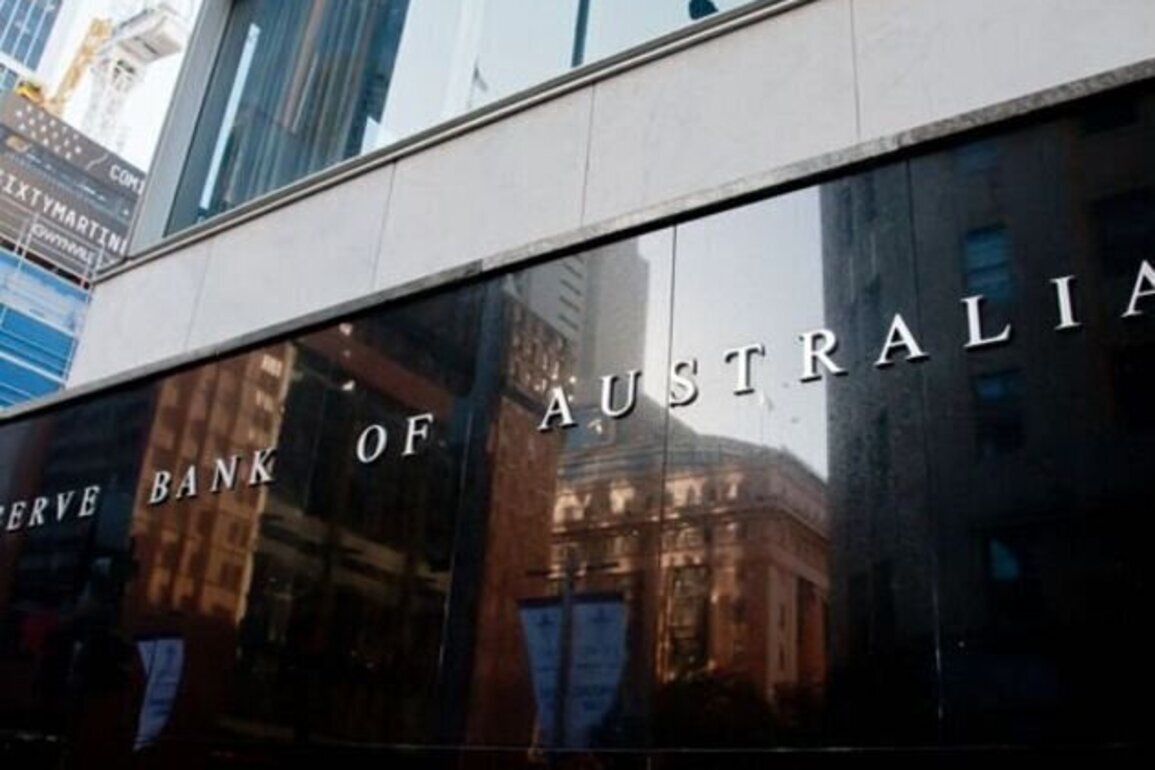
Central bank independence has entrenched an unaccountable system that prioritises financial sector gains while driving unemployment and eroding real wages, writes DrBronwyn Kelly.
AFTER 30 YEARS of its acceptance by mainstream economists and both progressive and conservative politicians, the validity and utility of central bank independence is now coming under increasing scrutiny.
And rightly so, because what does this independence actually do for those Australians who need to earn money by working? How does it help families when ourReserve Bankresponds to a rise in prices by raising interest rates and stoking growth in unemployment? How does it help anyone when the bank deploys an interest rate policy with the deliberate intention of putting people out of work at exactly those times when it is getting more expensive to live?
It doesnt help, of course. Hence, the increased dissatisfaction with the whole arrangement among thoughtful economists; for example,here,here,hereandhere.
So how did we get into this problem? In the mid-1990s, Australias Reserve Bank succeeded in obliterating the influence of democracy in its decisions by exploiting a loophole in theReserve Bank Act, which allowed it to introduce aStatement on the Conduct of Monetary Policy, giving itself the sole authority to determine interest rates (or more accurately, the cash rate target).
Will the RBA choose a recession for Australia?The Reserve Bank could kill talk of recession stone dead if it wanted to, writes Stephen Koukoulas. The fact it isn't is a serious concern.
At the time, it was thought that this would remove the bank from political interference in its decisions and, indeed, politicians were glad to be rid of the odium that comes from making decisions that constituents never like.
Those who want to park their money in interest-bearing deposits dont like it when the bank sets low interest rates. And those who want to pay their bills, buy a home or perhaps run a small business dont like it when the bank sets high interest rates. So naturally, the politicians were eager to let the cash rate decision cup pass from them.
But the independence of the Reserve Bank in interest rate decisions hasnt paid off for anyone, except those in the banking and financial sector who prefer high interest rates because they make money out of money. It hasnt helped those who need to make money out of employment or production. For instance, it hasnt helped anyone who wanted to borrow to start a small business. And it certainly hasnt paid off for those who needed their wages to keep pace with inflation.
Average annual real wage growth has trended downward over the past 20 years and over the last ten years, the average annualwageincrease has been below the average annual increase in theCPI. Between 2015 and 2025, average annual real wages fell by 0.3% (prices rose more than wages). And since COVID, average annual real wages have declined by 1.1% a fall which doesnt count the real increase in housing prices and mortgages (which are not measured in the CPI).
Things are a lot worse for most Australians than governments and the Reserve Bank are prepared to admit.
That is why it is time to review the wisdom of Reserve Bank independence. Leaving decisions on interest rates in the hands of the Reserve Bank where there are clear conflicts of interest arising from its lack of independence from the financial and banking sector is really unwise economically, politically and democratically.
This is not intended to imply that Australias Reserve Bank is corrupt, but there has not been sufficient recognition of the potential for corruption in the current system with its inbuilt tendency to favour returns for the financial sector at the expense of overall economic stability and the public interest.
The Reserve Bank of Australia is playing with fireThe latest interest rate hike is a sign of the Reserve Bank's overreach.
Australians can be protected from that potential by reorganising the governance arrangements for macroeconomic policy and changing the way decisions are made on interest rates and government spending.
To be insulated from the economic instability and price increases caused by the current separation of decisions on interest rates from decisions on public spending and taxing, urgent consideration should be given to pulling the control of monetary policy away from the Reserve Bank and placing it under a single board within the Treasury. This new board should be responsible for integrating decisions on fiscal and monetary policy by the use offunctional finance.
While the workings of functional finance are not well known in the fashionable economic circles of today, they can be readily understood as a means of integrating macroeconomic decisions for the benefit of the public. More specifically, functional finance switches around our understanding of the best use of monetary and fiscal policy tools. It prescribes the use of monetary policy not to control prices but to stimulate investment. And it shows the versatility of fiscal policy insofar as it can be used quite easily to control inflation without creating unemployment.
To put that another way, functional finance acknowledges the plain truth that monetary policy doesnt and cant control prices, but it can stimulate investment. It also acknowledges the truth that fiscal policy, not monetary policy, is best placed to control inflation.
This offers Australians an opportunity to balance their economy and achieve price stability without relying on a rise in unemployment and falls in real wages. And it means that Treasury staff need to relearn what was well known whenKeynesian economicsstrongly influenced economic decisions after WWII and before neoliberals succeeded in ejecting fiscal policy from its place of primacy in macroeconomic management arrangements that is, before neoliberal economists baked in a decision system which gave an unelected body free rein to create unemployment and cost of living pain.
If we ever want full employment with stable prices, we cant rely on central banks that cannot be held accountable in a democracy. The Government must take back the reins on our behalf and use fiscal and monetary tools for the purposes for which each is best suited, recognising that they cant stabilise either the economy or prices with a disintegrated fiscal and monetary policy system.
RBAs labour market call risks overtightening the economyIf the RBA has misjudged labour market tightness, current rates could unnecessarily weaken growth and jobs.
This is not a difficult job; indeed, everything would be easier for everyone. And the first easy thing Treasury could do is to replace the current inflation rate target band of 2-3% with a cash rate target band of 2-3%. Since there is no relationship between interest rate decisions and inflation (cash rates dont control inflation), daily decisions on the cash rate should aim instead to attract investors, especially in small businesses which offer employment opportunities close to home for available workers.
Doubtless, banks and mainstream economists will throw up their hands and cry nay in response to this proposal. But, astonishingly, mainstream economists have failed to question the logic of monetary policy and its utility in stabilising prices. Astonishing because it should be obvious that when the Reserve Bank raises interest rates, it doesnt control prices, it increases them. Increases in interest rates flow through to every aspect of the cost of living, and not just for mortgage holders.
So it is plainly wrong to maintain the status quo unquestioningly, especially since the unhindered and unbalanced application of monetary policy relies on achieving price stability by putting people out of work. Every time the Reserve Bank hankers after another 1% growth in unemployment, its Monetary Policy Board is trying to put about 140,000 more people out of work.
Thats the insanity and cruelty that inheres in independent decisions on interest rates. It is time to move on from this and back towards using the tools of macroeconomic policy to create full employment and price stability, not to stoke unemployment and price rises.
Find out more about how we can reorganise macroeconomic policy and governance inThe Public Interest Economy: the path to wellbeing, security and sustainable consumption in a democratised Australian economy by Bronwyn Kelly, the Founder of Australian Community Futures Planning (ACFP).
For information on functional finance, see the ACFP Fact Sheet,Extracts from The Public Interest Economy.
DrBronwyn Kellyis the Founder of Australian Community Futures Planning (ACFP). She specialises in long-term integrated planning for Australias society, environment, economy and democracy, and in systems of governance for nation-states.
Related Articles
- RBAs labour market call risks overtightening the economy
- The RBA did not make a mistake in 2025 the facts changed
- How rising house prices can help the economy
- RBA's interest rate cut a double-edged sword
- Interest rate changes dont always sway voters